
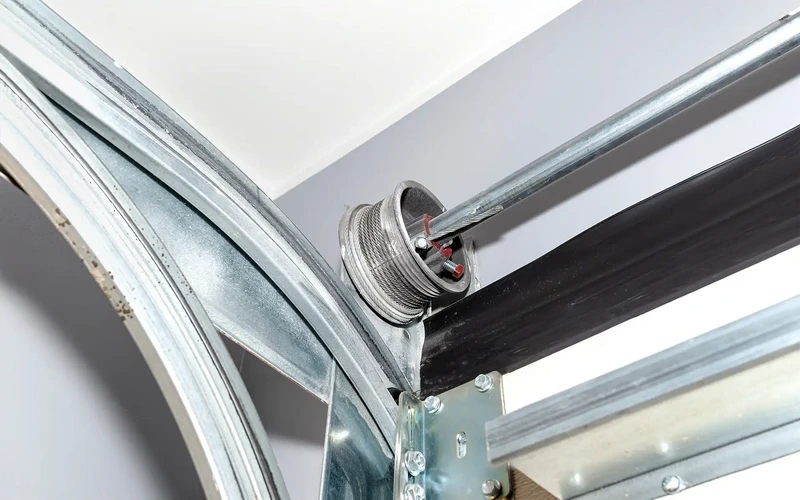
A cable can look damaged before a garage door stops moving. The important decision is not whether you can name the failed part from the driveway. It is whether the door should move again. If you see frayed wire, a hanging cable, or a door that sits crooked, do not use the garage door until a technician has inspected it.
Caliber Garage Doors handles garage door service and repair for homeowners in its Southern California market. This guide separates signs you can see without touching the door from symptoms that only suggest a cable problem. It also explains what to ask before approving garage door cable replacement.
Safety First: Leave the Door as You Found It
Keep people and pets clear of the opening. Do not run the opener again, pull the emergency release, lift the door by hand, reach for a cable, or loosen a bracket. Do not pass beneath a raised or crooked door. If a vehicle is trapped behind it, tell the service provider; do not try to free it by moving the door.
The Door & Access Systems Manufacturers Association (DASMA) says frayed or worn cables can break and should be replaced only by a trained technician because of high spring tension. It also warns that the bottom brackets connected to the springs are under extreme tension. This is not a project to troubleshoot by testing the door’s movement.
Seven Warning Signs, From Direct Evidence to Clues
These are observations, not a remote diagnosis or a prediction of exactly when a cable will fail. The first signs concern what is visible on the cable itself. The later signs can also have other causes. In every case, leave the system still and ask a technician to inspect it.
1. Wire Strands Are Frayed or Separated
Individual metal strands sticking out from a cable are a direct wear sign. DASMA specifically identifies frayed or worn cables as at risk of breaking. You do not need to count strands or decide how much damage is acceptable.
Look only from a safe, already accessible position. Do not walk under the door, pull the cable away from the track, or operate the door for a clearer view. Describe the location of the wear when you request garage door repair.
2. The Cable Appears Flattened, Kinked, or Uneven
A cable that no longer has a uniform shape deserves inspection. A flattened or sharply bent section may indicate that the cable has been damaged or is not traveling as intended, but appearance alone cannot tell you why. Do not try to straighten it or put it back on a drum.
The technician should examine the cable’s path and related hardware before recommending a replacement. Otherwise, a new cable may not address the condition that damaged the old one.
3. A Cable Hangs Loose Beside One Side of the Door
A loop of cable or a line hanging away from its usual path is a stop-use sign. It may be the cable, or another part of the spring and door system may have changed the cable’s tension. A loose-looking line does not make the nearby hardware safe to touch.
Tell the service provider whether the door is fully closed, partly open, or raised. Leave the opener and release the cord alone. A technician can determine why the cable is out of position without asking you to test it.
4. Corrosion or Abrasion Appears on the Cable
Visible rust, worn-looking wire, or rubbing marks warrant a closer professional look, especially if strands are also separating. A stain by itself is not proof that a cable is about to snap. The useful question is whether the wire has lost integrity and what caused the wear.
Do not spray the cable or tensioned hardware to see if the mark disappears. In coastal and inland Southern California garages alike, the inspection should be based on the actual cable and its surroundings, not an assumption about the local climate.
5. One Bottom Corner Sits Lower Than the Other
A tilted door is a clue that the system is no longer moving or resting evenly. Cable trouble is one possibility, but springs, tracks, and other parts also need inspection. A crooked door is not a reason to keep pressing the wall button until it lines up.
Do not use the garage door until a technician has inspected it. Tell Caliber which side looks lower and whether the change appeared after a noise or an earlier repair. The position of the door matters more than your guess about the part.
6. The Door Stopped Partway or Changed Its Movement
If the door had already become uneven, jerked, or stopped during its last use, a cable may be involved. That behavior does not establish the cable as the cause. DASMA says a door that does not move smoothly may have an unsafe condition and that spring systems should be repaired by trained professionals.
Do not recreate the symptom for a video or try a manual balance test. Report what happened during the last normal attempt to use the door. Caliber’s garage door maintenance page is useful for general service context, but suspected cable damage needs an inspection before another cycle.
7. A Sudden Noise Was Followed by a Visible Change
A bang alone cannot identify a cable; a spring or another part could be involved. If a noise was followed by a hanging cable, uneven door, or stopped movement, treat the combination as a reason to leave the door still. Tell the technician the order in which you noticed the events.
Do not search for the source by touching the spring, drum, or lower bracket. The inspection must determine which part failed first and whether another component was affected.
What Does a Cable Replacement Quote Need to Explain?
Ask for a diagnosis before approving a part list. Was the cable itself worn, or did a related component change its path or load? What was found on the other side? Which parts need work now, and which, if any, are only preventive recommendations?
These questions help you understand the repair without pretending you can inspect tensioned hardware yourself.
It is reasonable to ask whether replacing one cable or both is appropriate for your door. Do not assume that two are always necessary, or that replacing only the visibly damaged cable is always enough. The answer depends on the condition of the whole system as found on site.
Price also depends on what the technician finds: the door’s configuration, the parts required, the condition of the opposite side, and any additional spring, drum, track, or bracket work. Caliber has not supplied an approved public cable-replacement price range for this article, so we will not invent one.
Request a written scope and price after inspection, and ask what changes would require a revised quote.
When Is an Inspection More Useful Than Buying Parts?
Always, if the door is crooked, a cable is loose, or the wire is worn. A cable bought before diagnosis may not fit the door or solve the reason it went out of position. If the door is level and you have merely noticed a mark from a safe distance, you still should not use it until the condition has been checked.
For a future routine visit, ask about a visual review of the cables and surrounding system rather than waiting for a failure. DASMA recommends monthly homeowner safety checks and an annual visit from a trained door-systems technician, while reserving cable replacement for a trained technician. That is a way to notice wear, not permission to handle the cable.
Garage Door Cable Replacement FAQs
Can I Keep Using the Door if Only One Cable Looks Frayed?
- No. Do not use the garage door until a technician has inspected it. DASMA warns that frayed or worn cables can break and cause injury.
Is a Loose Cable Always a Broken Cable?
- No. A loose appearance tells you the system needs inspection, not which component failed. Leave the door still and describe its position to the technician.
Should I Replace Both Garage Door Cables at Once?
- Ask the technician to inspect both and explain the recommendation. The condition of the other cable and the cause of the problem should guide the scope, rather than a rule applied to every door.
Can I Pull the Emergency Release to Close a Crooked Door?
- No. Do not use the release or try to move a crooked door by hand. Keep clear of the opening and arrange a professional inspection.
How Much Does Garage Door Cable Replacement Cost?
- There is no verified Caliber price range to quote here. Ask for a written diagnosis and price that identifies the cable work and any additional parts separately before approving the repair.
What Should I Tell Caliber When I Call?
- Say whether the door is fully closed, partway open, or raised; whether it is level; and what cable damage you can already see without approaching it. Mention any noise or change in movement that happened before you stopped using it.
Get an Answer Before Moving the Door Again
A visible damaged cable is enough reason to stop; a crooked or stalled door calls for the same caution even when you cannot see the cause. Caliber Garage Doors can assess garage door service needs in its Southern California market and explain the proposed repair after seeing the system. For its Claremont-area customers and other confirmed service locations, call (800) 615-4115 or contact Caliber. Describe the door as it sits; you do not have to diagnose it first.